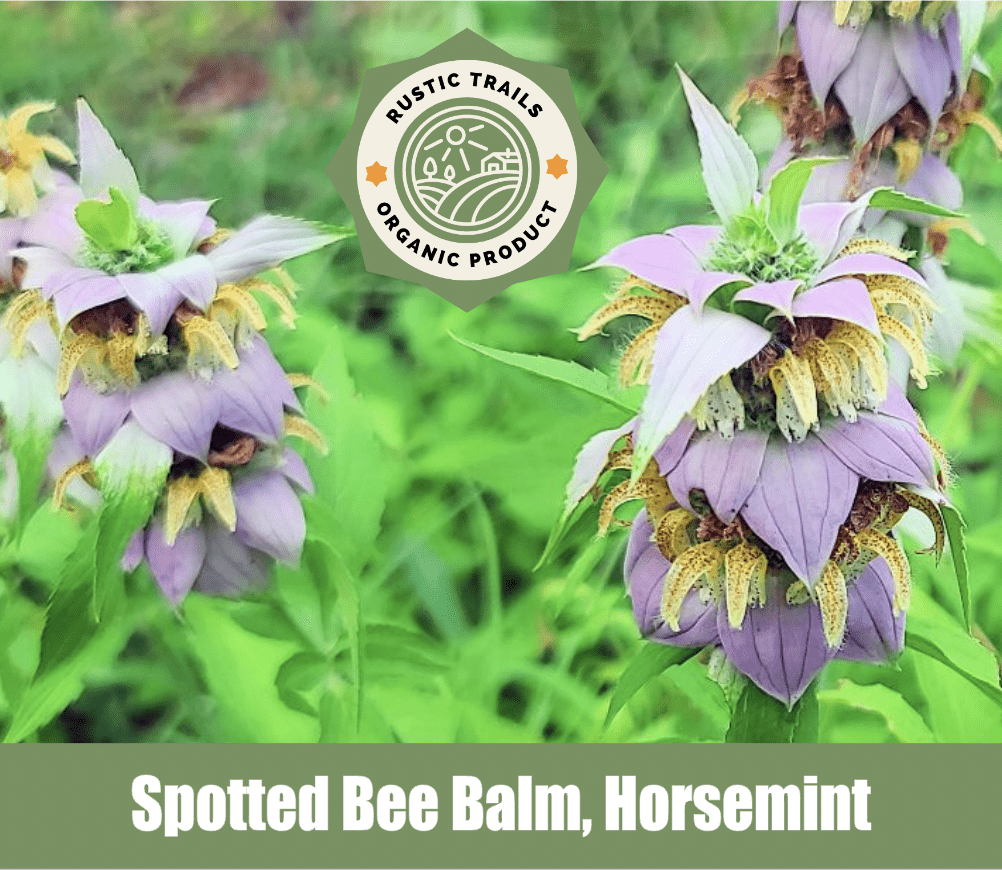
Spotted Bee Balm, also known as Horsemint (Monarda punctata), is a perennial herbaceous plant that belongs to the mint family, Lamiaceae. This native North American wildflower is known for its unique appearance and delightful fragrance. Spotted Bee Balm gets its name from the distinctive purple spots that adorn its light-colored flowers, which attract bees, butterflies, and hummingbirds to the garden.
Spotted Bee Balm, also known as Horsemint (Monarda punctata), is a perennial herbaceous plant that belongs to the mint family, Lamiaceae. This native North American wildflower is known for its unique appearance and delightful fragrance. Spotted Bee Balm gets its name from the distinctive purple spots that adorn its light-colored flowers, which attract bees, butterflies, and hummingbirds to the garden.
Historical Information and Fun Facts:
Spotted Bee Balm has a rich historical background. Native American tribes, such as the Osage and Meskwaki, used this plant for its medicinal properties, as well as for culinary purposes. They infused the leaves and flowers to make soothing teas and used the herb in poultices to alleviate various ailments, including digestive issues and cold symptoms.
Materials Needed to Grow Spotted Bee Balm, Horsemint from Seeds:
Spotted Bee Balm seeds: Obtain seeds from a reliable supplier or harvest them from mature plants.
Seed tray or small pots: Use these containers to start the seeds indoors.
Seed starting mix: This well-draining soil mix provides a suitable medium for germination.
Watering can or spray bottle: For watering the seeds and seedlings.
Grow lights or a sunny location: Spotted Bee Balm requires ample light for healthy growth.
Fertilizer (optional): A balanced organic fertilizer can be used to support growth.
Steps to Grow and Harvest Spotted Bee Balm, Horsemint from Seeds:
Seed preparation (optional): Some gardeners recommend stratifying the seeds to improve germination rates. To stratify, place the seeds in a sealed plastic bag with a moist paper towel and refrigerate for 30 days.
Fill the seed tray or pots with the seed starting mix.
Sow the Spotted Bee Balm seeds on the soil surface, lightly pressing them into the mix.
Mist the soil gently to moisten it.
Place the tray or pots in a warm location with sufficient light or under grow lights.
Keep the soil consistently moist, but avoid overwatering.
Germination should occur within 7-14 days.
Once the seedlings have developed their second set of true leaves, transplant them into larger containers or directly into the garden.
Choose a sunny or partially shaded location with well-draining soil for planting.
Space the plants 12-18 inches apart to provide adequate room for growth.
Water the young plants regularly, especially during dry periods.
Spotted Bee Balm will bloom in the summer, attracting pollinators with its vibrant flowers.
To harvest the leaves or flowers, wait until they are fully developed and carefully cut them near the base of the stem.
Precautions with Spotted Bee Balm, Horsemint:
While Spotted Bee Balm is generally safe to handle and grow, it’s worth noting that some individuals may experience skin irritation or allergic reactions when in contact with the plant. If you have sensitive skin, it is advisable to wear gloves when handling the plant or its extracts.
Uses for Spotted Bee Balm, Horsemint:
Ornamental plant: Spotted Bee Balm adds beauty to gardens, flowerbeds, and wildflower meadows with its attractive flowers and aromatic foliage.
Pollinator attractant: The flowers of Spotted Bee Balm are highly attractive to bees, butterflies, and hummingbirds, making it an excellent addition to pollinator gardens.
Culinary herb: The leaves of Spotted Bee Balm can be used to infuse teas or add a hint of minty flavor to salads, sauces, and desserts.
Medicinal Benefits of Spotted Bee Balm, Horsemint:
Spotted Bee Balm possesses several medicinal properties. It has been traditionally used for:
Digestive health: Spotted Bee Balm tea can help alleviate digestive issues like indigestion, bloating, and gas.
Respiratory support: The herb has been used to soothe coughs, colds, and congestion.
Anti-inflammatory effects: Spotted Bee Balm contains compounds that may help reduce inflammation and ease discomfort.
Antiseptic properties: The plant has natural antiseptic qualities and has been used topically to clean wounds and prevent infection.
Please note that while Spotted Bee Balm has a history of traditional medicinal use, it is always recommended to consult with a healthcare professional before using any herbal remedies for specific health conditions.
Below are some of the items we feel will help when growing your seeds.
Below are products we believe will be beneficial to you as you grow your seeds. We have tried to locate items that are priced well as well as quality for the dollar value. Please note many of these are affiliate links and I will receive compensation for some of the items below. By using affiliate links, we can keep the cost of our products down and share the savings with you.
Microgreens Indoor Growing Kit – Includes Microgreens Tray, Microgreens Organic Seeds, Mats and Bamboo Surround. Soil Free. Easy to Set up. Self Watering Sprouting Kit. Guaranteed to Grow.
15 Pack Jute Grow Mat for Microgreens- Hydroponic Grow Pads Fits for Standard 10″ X 20″ Germination Trays Home Micro Greens Plant Growing Kit for Wheatgrass Sprouts and Organic Production
Plant Grow Light 6 Packs. T5 Samsung&Full Spectrum 3500K 6500K&Red LED with Auto Cycle Timer. 3/6/12Hours Dual Channel 4 Brightness Level Growing Lamp for Indoor Plants from Seeding to Harvest.
Sprouting Jars with Mesh Lids, Microgreens Growing Kit, Sprouts Growing Kit, Wide Mouth Mason Jar, Seed Germination Kit, Indoor Sprouter Set for Growing Organic Broccoli Alfalfa Beans (2 Pack)
Superfood Microgreens Indoor Growing Kit with 3 Starter Seed Pod Trays and Grow Light, Smart Indoor Garden (Ceramic) | Jet Black
10 Pads Jute Plant Grow Mat Hemp Mats for Microgreens Growing 10″ X 20″ Hydroponic Grow Pads for 1020 Growing Trays Indoor Sprouting kit for Microgreens Wheatgrass Sprouts Organic Production
10 Packs Seed Starter Tray Seed Starter Kit with Humidity Dome (120 Cells Total Tray) Seed Starting Trays Plant Starter Kit and Base Mini Greenhouse Germination Kit for Seeds Growing Starting
Sun & Sprouts Complete Sprouting Kit – 2 Large Wide-Mouth Mason Jars, Premium Screen lids, Blackout Sleeves, Tray and sprouter Stand – for Growing Broccoli, Mung Bean, Alfalfa Sprout from Seed
Pack Seed Starter Kit Including Seed Starter Tray Peat Pots for Seedlings with Plant Labels, Tool, Plastic Growing Trays Germination Tray Paper Seedling Cups for Indoor Outdoor Garden
5-Set Garden Propagator Set, Seed Tray Kits with 200-Cell, Seed Starter Tray with Dome and Base 15″ x 9″ (40-Cell Per Tray)
3″ Seed Starter Tray 20 Pack peat pots for seedlings,with Humidity Dome,Biodegradable,3 Pcs Mini Seedling Tools
100 Pack 2.35″ Square Plant & Seed Starter Peat Pots – Biodegradable Compostable Nursery Pots for Vegetables or Herbs – Use for Germination or Seedlings
Seedling Starter Trays, 720 Cells: (120 Trays; 6-Cells Per Tray), Plus 5 Plant Labels
200 Cell, 10pcs-Pack Thick Durable Flats Vegetable Fruit Seeds Seedling Trays for Roots Propagation
3″ x 20″ Seedling Heat Mat and Digital Thermostat Combo Set
Indoor Garden Hydroponic Growing System: Plant Germination Kit Aeroponic Herb Vegetable Growth Lamp Countertop with LED Grow Light
Hydroponics Growing System 10 Pods, inbloom Indoor Herb Garden with LEDs Full-Spectrum Plant Grow Light, Water Shortage Alarm, Automatic Timer, Height Adjustable(7” to 15.2”), 4.2L Water Tank, Black
Hydroponics Growing System 12Pods, Indoor Garden with LED Grow Light, Plants Germination Kit, Built-in Fan, Automatic Timer, Adjustable Height Up to 11.3″ for Home, Office
Rosemary Gladstar’s Medicinal Herbs: A Beginner’s Guide: 33 Healing Herbs to Know, Grow, and Use
Seed Sprouter Tray Seed Germination Tray Nursery Tray for Seedling Planting Big Capacity Healthy Wheatgrass Grower Sprouting Container Kit with Lid, Suit for Kitchen Garden Home Office, BPA Free
The Forager’s Harvest: A Guide to Identifying, Harvesting, and Preparing Edible Wild Plants
6×8 FT Hybrid Polycarbonate Greenhouse 2 Vent Window with Lockable Hinged Door Walk-in Hobby Greenhouse Aluminum Hot House for Outdoor Garden Backyard Silver
Southeast Medicinal Plants: Identify, Harvest, and Use 106 Wild Herbs for Health and Wellness


 Plastic Growing Trays, 5 Pack, Black, Plant Tray, Seed Tray, Seedling Tray, Propagation Tray, Plant Trays for Seedlings, Planting Trays, Microgreens Growing Trays, Seedling Starter Trays


 Sun & Sprouts Complete Sprouting Kit – 2 Large Wide-Mouth Mason Jars, Premium Screen lids, Blackout Sleeves, Tray and sprouter Stand – for Growing Broccoli, Mung Bean, Alfalfa Sprout from Seed