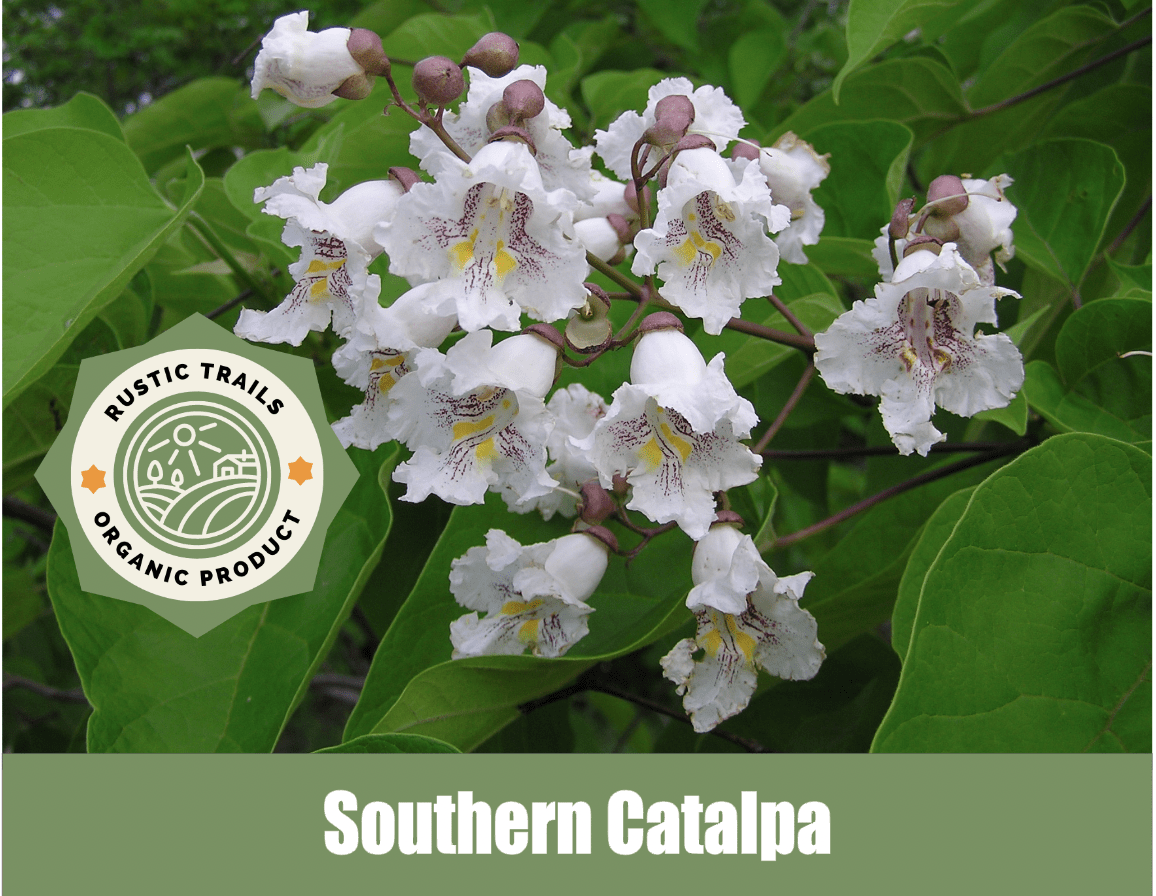
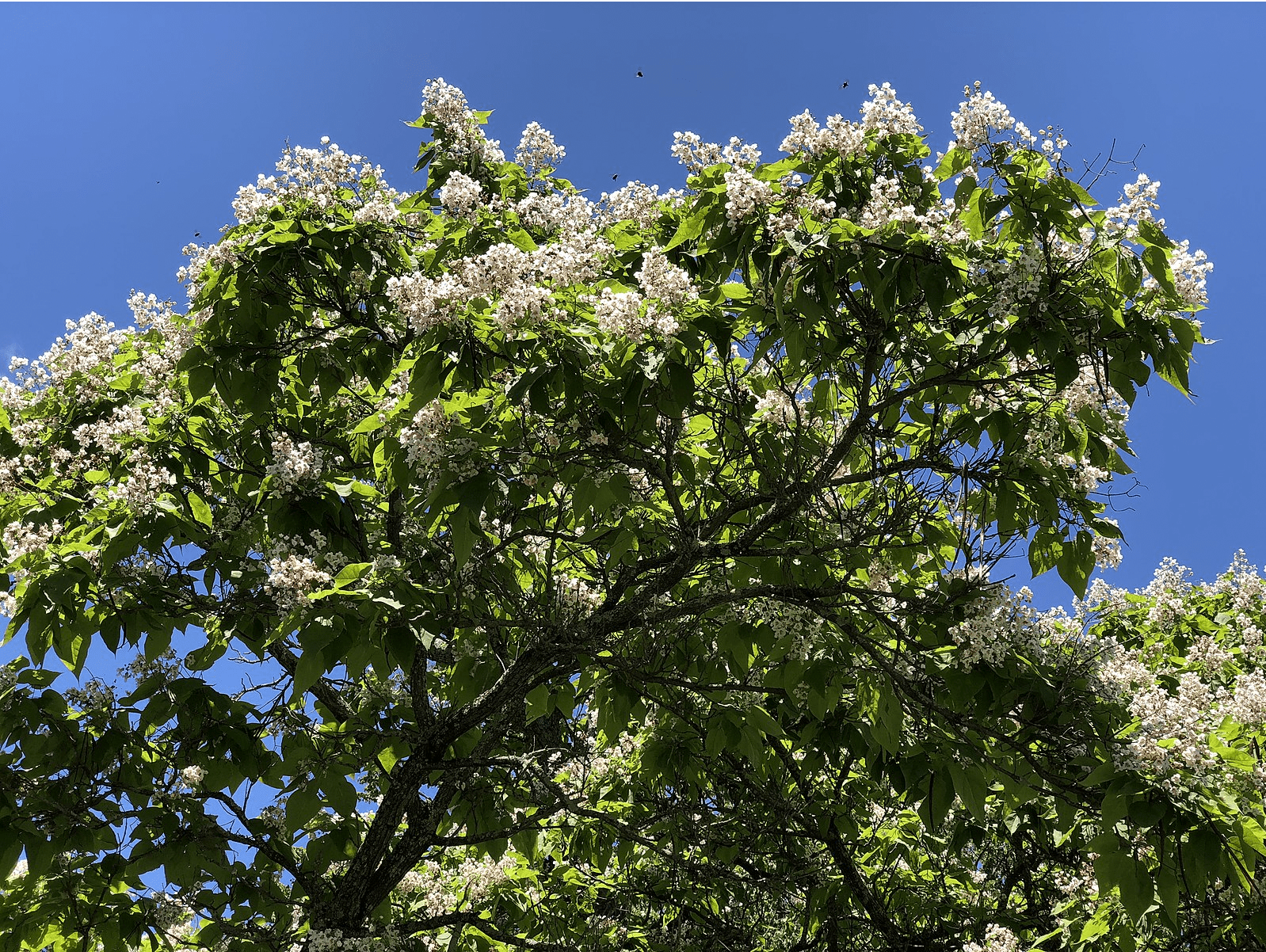
Southern Catalpa, scientifically known as Catalpa bignonioides, is a deciduous tree native to the southeastern United States. It is renowned for its showy and fragrant inflorescence, which consists of clusters of white, trumpet-shaped flowers that bloom in late spring or early summer. The tree itself can grow up to 50 to 60 feet (15 to 18 meters) in height, with a spreading crown and large, heart-shaped leaves.
Historically, Southern Catalpa has been valued for its ornamental qualities and has been cultivated in gardens and parks for its beautiful flowers and unique shape. It has also played a significant role in American history, particularly during the mid-19th century. During this period, Catalpa trees were often planted to provide shade and act as windbreaks around homesteads and farms. Additionally, the wood of the Catalpa tree was used for making fence posts and railroad ties due to its durability and resistance to rot.
Worms from the catalpa tree have long been valued as fish bait, and some fishermen plant the trees just for this purpose. They are used by fishermen to catch bass and bream, but they make especially great bait for channel catfish.
Growing Southern Catalpa from seeds requires the following materials:
- Fresh Catalpa seeds
- Seed trays or pots
- Seed starting mix or well-draining soil
- Plastic wrap or a transparent cover
- Watering can or spray bottle
Here are the steps to grow and harvest Catalpa from seeds:
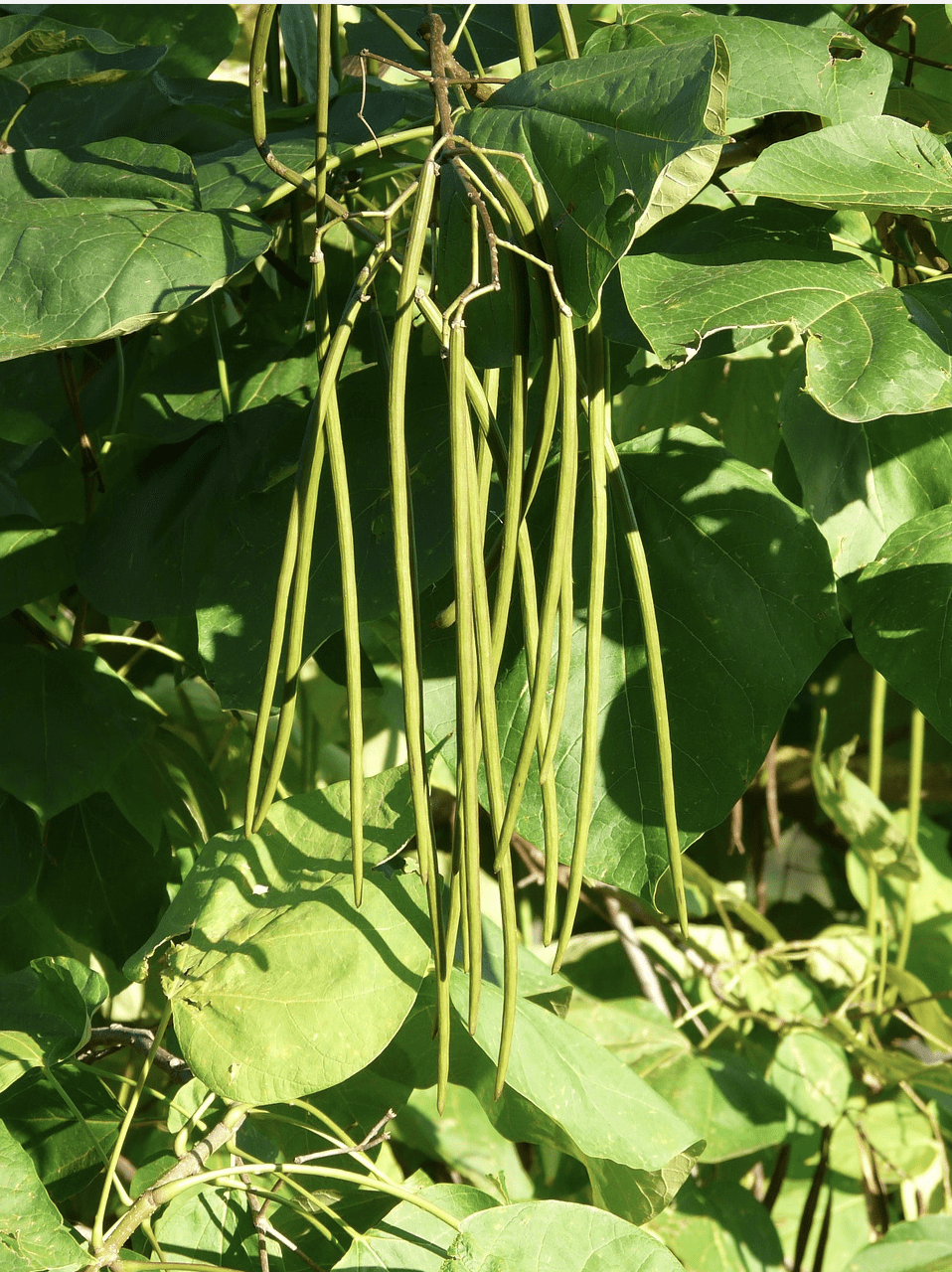
- Obtain fresh Catalpa seeds either by collecting them from mature Catalpa pods or purchasing them from a reputable source.
- Fill seed trays or pots with a well-draining seed starting mix or soil.
- Plant the Catalpa seeds about half an inch (1.3 cm) deep into the soil, spacing them apart to allow room for growth.
- Lightly water the soil to ensure moisture but avoid overwatering, which can lead to rotting.
- Cover the seed trays or pots with plastic wrap or a transparent cover to create a greenhouse-like environment. This helps retain moisture and warmth.
- Place the trays or pots in a warm location, such as near a sunny window or in a greenhouse, maintaining a temperature of around 70 to 75°F (21 to 24°C).
- Keep the soil consistently moist by misting it with water or using a spray bottle.
- After about 2 to 3 weeks, the Catalpa seeds should begin to germinate. Once the seedlings have developed their first true leaves, they can be transplanted into individual pots or directly into the ground.
- Gradually expose the young Catalpa plants to outdoor conditions by placing them in a sheltered area for a few hours each day. This process, known as hardening off, helps acclimate the seedlings to the outdoor environment.
- Once the Catalpa trees have matured and produced seed pods, you can harvest the seeds for future propagation.
It’s important to note that Catalpa seeds have hard seed coats, which can inhibit germination. To enhance germination rates, you can scarify the seeds by nicking or filing the seed coat, or you can soak them in hot water for 24 hours before planting. These methods help to break the seed coat and improve seed viability.
When dealing with Southern Catalpa, it’s essential to take some precautions. The tree has a shallow root system, so it’s important to avoid planting it near structures, sidewalks, or utility lines. Additionally, Catalpa trees can attract insects, such as caterpillars, that feed on its leaves. While this may not be a concern for the tree’s health, it can be aesthetically displeasing for some.
Southern Catalpa has various uses, primarily ornamental and landscaping purposes. Its attractive flowers make it an excellent choice for gardens and parks. The tree’s broad canopy provides ample shade, making it ideal for recreational areas and outdoor seating. Catalpa wood is also used for making furniture, cabinetry, and musical instruments, thanks to its durability and attractive grain.
While Southern Catalpa is primarily valued for its ornamental and utilitarian qualities, it also has some medicinal benefits. Traditional herbal medicine utilizes different parts of the tree for various purposes. The bark and leaves of Catalpa are said to have antimicrobial and anti-inflammatory properties. They have been used in herbal remedies to treat skin conditions, fevers, respiratory issues, and digestive disorders. However, it’s important to note that scientific research on the medicinal benefits of Catalpa is limited, and consulting with a healthcare professional is advisable before using it for medicinal purposes.
Overall, Southern Catalpa is a captivating tree with a rich history and numerous practical uses. Its striking inflorescence, ease of cultivation, and potential medicinal benefits make it a valuable addition to gardens and landscapes.



 Plastic Growing Trays, 5 Pack, Black, Plant Tray, Seed Tray, Seedling Tray, Propagation Tray, Plant Trays for Seedlings, Planting Trays, Microgreens Growing Trays, Seedling Starter Trays


 Sun & Sprouts Complete Sprouting Kit – 2 Large Wide-Mouth Mason Jars, Premium Screen lids, Blackout Sleeves, Tray and sprouter Stand – for Growing Broccoli, Mung Bean, Alfalfa Sprout from Seed